
Proven Weight Loss Tips for Women Over 40 to Crush Your Plateau
Finally Break Through Your Stubborn Plateau
You’ve done everything right, haven’t you? The cleanses, the calorie counting, the endless cardio. You followed the rules, did the work, and still… nothing.
That feeling of hitting a brick wall—of doing the same thing over and over with no progress—is more than just frustrating. It's soul-crushing.
Take Saran, a 43-year-old busy project manager. She’d been there. She poured her energy into every diet and new trend, but the number on the scale wouldn’t budge. She felt so discouraged, whispering to herself that she must be failing. She resented the quick fixes she saw others trying, feeling like she was being left behind. She just wanted a realistic path forward.
Like her, you may be looking in the mirror, wondering, "Is it me? Am I broken?"
Let's be crystal clear: that whisper is wrong. You aren't broken.
You're just playing a new game with an old rulebook. After 40, your body has changed, and the old tricks simply don’t work anymore.
Resentment builds as you watch others succeed on diets that feel impossible to you. But what if the secret isn’t to try harder, but to try differently?
It’s time to stop fighting your body and start working with it.
This isn't about more dieting. This is about a different path—a realistic, proven way to finally crush your plateau for good. Let’s begin.
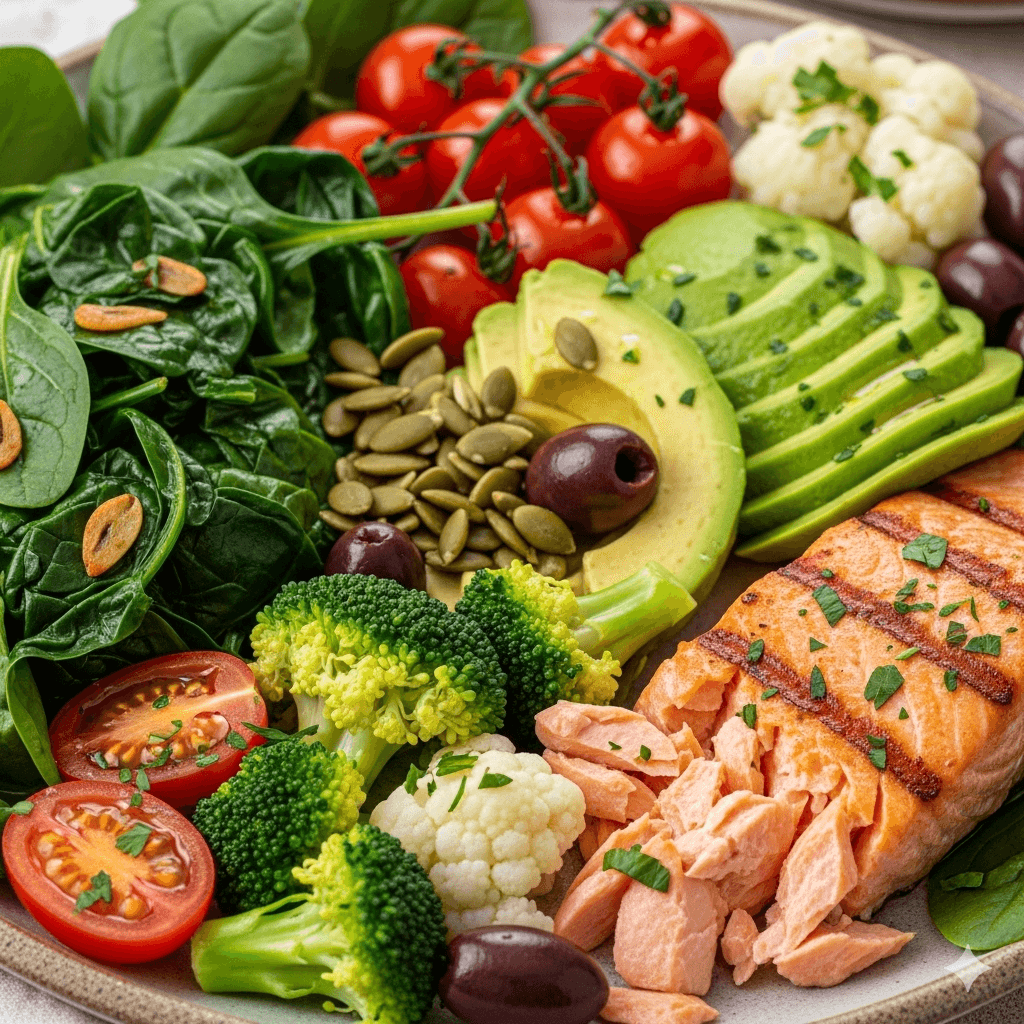
1. Ditch the Diet Talk, Embrace the Feast
-The world of weight loss for women over 40 is filled with so much noise. You’re told to count every calorie, to meticulously track every macro, to live and die by the numbers on a scale. It's exhausting, isn't it?
You may have been doing this for years, logging your food with an almost religious devotion, only to see the numbers on the scale freeze. You might start to think that maybe you just don’t have the willpower. Maybe you’re just not built to lose weight.
But what if all that rigid counting is actually the problem? What if the very thing you think you need to do is the reason your metabolism is stuck?
Why Counting Calories Fails you
It’s a counterintuitive truth: your body, especially as it moves into midlife, responds to extreme restriction with stubborn resistance. When you slash your calories too low in a relentless pursuit of a calorie deficit for aging women, your body doesn't say, "Great, let's burn fat!" Instead, it says, "Warning! Starvation alert!"
This triggers a protective mechanism where your metabolism slows down, a phenomenon known as metabolic adaptation [1]. Your body gets super efficient at using the few calories you give it, making it incredibly hard to lose weight. It's a primal defense system, one that’s even more sensitive to stress and dietary changes during perimenopause due to hormonal shifts [2].
You’re not broken; your body is just trying to protect you. The problem is that it’s protecting you from the wrong thing.
The Nourish, Don't Restrict Approach
So, let's toss the calculator and the tracking apps. The real secret to a healthy weight loss for women over 40 isn't to restrict, but to nourish. Think of it less as a diet and more as a feast.
Your body isn’t a calculator; it's a garden that needs the right nutrients to flourish.
Fill your plate with a vibrant rainbow of whole foods—colorful vegetables, lean proteins, and healthy fats. Focus on what you can add to your diet, not what you need to take away. Eating a wide variety of nutrient-dense foods naturally regulates your appetite. It floods your body with the vitamins and minerals it needs to function optimally, which in turn reduces the inflammation that can often stall weight loss.
Our free e-book, 21 Free Keto Recipes, can be your guide. It's filled with delicious, satisfying meals that focus on nutrient-dense ingredients to nourish your body and fuel your metabolism without the need for calorie counting.
Your body stops feeling like it’s in crisis mode and starts to release stored fat, almost as a side effect of being so well-fed. This is a crucial sustainable fat loss strategy. It's about giving your body what it needs to thrive, so it can do what it’s supposed to do.
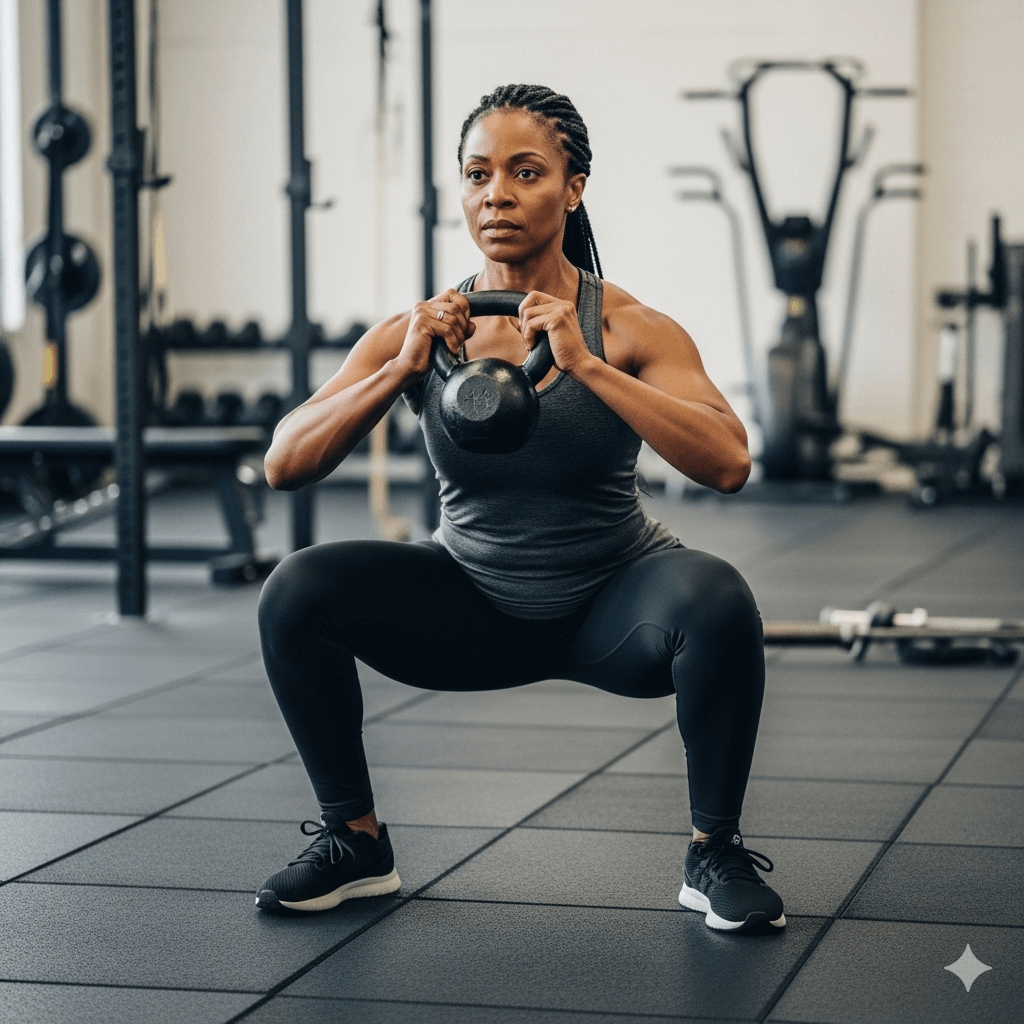
2. Lift Heavy Things... And Stop Doing So Much Cardio
For decades, the standard advice has been to do more cardio to lose weight. We were told that miles on the treadmill or hours on the elliptical were the only way to melt fat. So you laced up your sneakers, you hit the pavement, you spent hour after grueling hour working up a sweat.
You did all that, and yet the scale barely moved. The truth is, that long, slow cardio sessions might be working against you. It's a good tool for heart health, but it's not the best tool for an effective weight loss strategy for women midlife. It's time to trade in the running shoes for a set of dumbbells.
Your Metabolism's Secret Weapon
This isn’t about bulking up or looking like a bodybuilder. It's about building a strong, metabolically active body.
Your lean muscle tissue is a calorie-burning powerhouse. Unlike fat, which just sits there, muscle requires energy even at rest [3]. The more muscle you have, the higher your resting metabolic rate (RMR), which means you’re burning more calories just by sitting on the couch.
As we age, especially after 40, our bodies naturally lose muscle mass in a process called sarcopenia. This is one of the biggest reasons for the dreaded metabolism slowdown after 40. When you lose muscle, you lose your internal furnace, making it easier to gain weight and harder to lose it.
The Path to Progressive Overload
This is where resistance training for women over 40 becomes your secret weapon. By lifting heavy things—whether it's dumbbells, kettlebells, or even your own body weight—you signal to your body to build and preserve muscle [4]. This is how you strength train to break a plateau.
Don’t be afraid to challenge yourself with a weight that’s heavy enough to make the last few reps tough. That's the principle of progressive overload workouts midlife. Start small and gradually increase the weight or reps over time. You don't need to live in the gym. Two to three focused sessions a week can be enough to see a significant difference.
This simple shift from cardio to strength training is the key to unlocking your body’s true fat-burning potential. You'll not only look more toned but also feel that surge of energy when you carry groceries, or the newfound confidence when you climb a flight of stairs. You'll feel stronger, more confident, and ready to tackle anything.
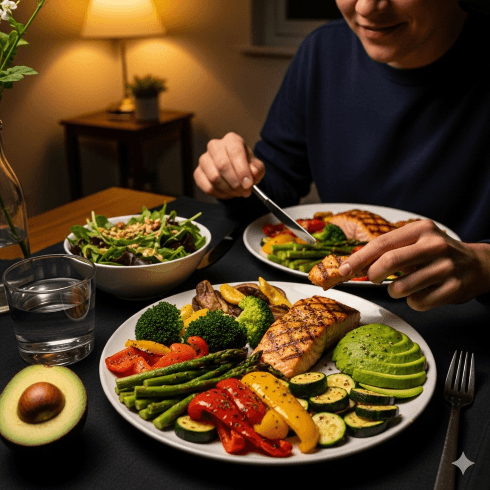
3. Eat Your Biggest Meal at the "Wrong" Time
The old diet rulebook is filled with commandments like, "Never eat after 7 p.m." or "Eat a tiny dinner so you don't go to bed full." For years, you might have eaten a small, unsatisfying dinner, only to find yourself starving and raiding the pantry an hour before bed.
Your resolve crumbles, and the cycle of guilt and overeating begins again. But what if that rule is completely wrong? What if the key to losing weight isn't about avoiding a big dinner, but about making it the most nourishing and satisfying meal of your day?
The Cortisol Connection
It's a huge mindset shift, but it’s backed by science. Your body's stress hormone, cortisol, naturally follows a rhythm. It’s supposed to be high in the morning to get you up and energized, and low in the evening to prepare you for rest.
However, stress, poor sleep, and a lack of proper nutrition can cause cortisol to spike at night [5]. High evening cortisol can cause your body to store fat, especially that stubborn belly fat, which is a key symptom of hormonal weight gain perimenopause.
Think of it as your body's "fight or flight" mode. When you’re stressed, your body holds on to every calorie it can get. A tiny, unsatisfying dinner can feel like a stressor to your body, keeping those cortisol levels high.
Fueling Your Body for Rest
The surprising solution? Eat a balanced, satisfying, and delicious dinner that actually fills you up. Make it your largest meal of the day, if you want. A meal with a good balance of protein, healthy fats, and complex carbohydrates can help to lower cortisol levels and balance your blood sugar before bed [6].
It signals to your body that it's safe and well-fed, allowing it to transition into a state of "rest and digest." This promotes better sleep and, in turn, better fat loss. By giving your body the fuel it needs at the end of the day, you’re less likely to experience those late-night cravings.
Want to find satisfying dinner ideas that will help you manage your cortisol levels? My free e-book, 21 Free Keto Recipes, is packed with delicious, easy-to-make dinner recipes that will keep you full and nourished all night long.
The result? You’ll feel more in control, sleep better, and wake up feeling less bloated and more prepared for a successful day.

4. Walk Less, Get More (Focused Cardio)
You’ve probably been told that the secret to lose weight after 40 is all about getting in your 10,000 steps a day. You bought the fitness tracker, you scheduled your walks, and you diligently hit your target. But the scale just won’t budge.
You may wonder what you’re doing wrong. The truth is, while walking is fantastic for your health, it’s not always the most efficient way to break a weight loss plateau for women over 40. Your body is smart. It adapts. It gets used to the same routine, and what was once a fat-burning workout becomes maintenance.
The Adaptation Problem
It's time for a new approach—one that works smarter, not harder. Instead of an hour of steady-state cardio, try just 15 minutes of high-intensity interval training (HIIT). This involves short, intense bursts of exercise followed by brief rest periods.
Think sprinting for 30 seconds, then walking for 60 seconds, and repeating that cycle. This approach shocks your system in a way that long, steady-state cardio can’t [7]. The magic happens not just during the workout, but for hours after.
The Power of the "After-Burn" Effect
This is called the EPOC effect (Excess Post-exercise Oxygen Consumption), or what we can call the "after-burn" effect. Your body continues to burn calories at a higher rate as it works to recover and restore itself [8].
HIIT is one of the most powerful weight loss plateau busting tips because it directly addresses the metabolic slowdown that comes with age. It helps improve insulin sensitivity and boosts human growth hormone production, both of which are crucial for fat loss [9]
.
It’s a game-changer. You save time, get a more effective workout, and turn your body into a metabolic furnace long after you've left the gym. So, ditch the hours on the treadmill and swap them for a few intense, focused sessions a week. You’ll be shocked at the difference it makes

5. Sleep Your Way to a Smaller Waistline
You’ve probably heard it before: get more sleep. But let’s be honest, it’s the first thing that gets cut from a busy schedule. You have a to-do list a mile long, and the only way to get it all done is to burn the candle at both ends. You're exhausted, you're running on fumes, and you're eating all the wrong things.
You're convinced that if you just had more time to work out, you'd be able to lose weight. But what if all that hustle is actually sabotaging your efforts? What if the most powerful tool for proven weight loss tips over 40 isn't an hour in the gym, but an extra hour in bed?
Hormones in Chaos
When you’re sleep deprived, your body’s hormones go into a tailspin. Think of them as the managers of your body. When the managers are tired, they make bad decisions. Specifically, two key hormones, ghrelin and leptin, get thrown out of whack.
Ghrelin is your hunger hormone—it tells you when to eat. Leptin is your satiety hormone—it tells you when to stop [10]. When you don’t get enough sleep, ghrelin levels rise, and leptin levels fall.
This is a powerful combination that leaves you feeling ravenously hungry, with an insatiable desire for high-calorie, sugary foods [11]. The result is that you eat more, you crave unhealthy foods, and you lose all willpower. Your hormones are literally working against you, making it impossible to stick to a plan.
Sleeping Your Way to Success
This is a profound mindset shift that weight plateau requires. You have to start seeing sleep not as a luxury, but as a critical component of your weight loss strategy. It's more important than that early-morning workout.
When you prioritize sleep, your body has the time it needs to recover, repair, and regulate its hormones. It’s when your body works its magic. By getting seven to nine hours of quality sleep, you keep your ghrelin and leptin in check, naturally reducing your appetite and making it easier to make healthy choices.
This is the ultimate consistency for over 40 weight loss strategy. It’s about being kind to your body and giving it what it truly needs to thrive.
The Real Breakthrough
You've been through so much. The frustration, the self-doubt, the moments you’ve stood in front of the mirror and thought, “Why isn’t this working for me?”
You've felt the resentment build as you've watched others get results from quick fixes and trends that feel completely out of reach. That feeling is real, and it’s valid. It’s not your fault.
The reason you’ve felt like you’re failing is that you’ve been fighting a battle with a body that’s changed.
But what if you didn’t have to fight? What if the key to unlocking your body's potential wasn't about punishing it, but about loving it?
We've talked about ditching the diet rules and embracing a feast, not to just nourish your body, but to heal your relationship with food. We've replaced endless cardio with the power of strength training, turning you into a strong, confident, fat-burning powerhouse.
We've proven that your biggest meal and your deepest sleep are your greatest allies.
And that's exactly what happened to Saran, our busy project manager. This article helped her shift her mindset from one of frustration and self-doubt to one of hope. She stopped feeling like she was failing and began to see her body not as a problem to be solved, but as a partner to be nourished.
The resentment she once felt toward quick fixes and extreme diets faded as she found a realistic, sustainable path forward. This article gave her the hope she'd been searching for—and a new way to finally crush her plateau.
If you’re ready to start this new journey with strength, rest, and real nourishment, my 21 Free Keto Recipes e-book is a fantastic first step. It provides a simple, delicious way to nourish your body and break free from the old, restrictive rules. Get your copy today and start your new chapter.
Like Saran, you too have the power to change the story. It’s time to stop the cycle of restriction and disappointment and start a new journey built on strength, rest, and real nourishment.
The answer isn't another impossible rule; it’s a compassionate, sustainable strategy that works with you.
You are not broken. You are brilliant, strong, and deserving of a body that feels as vibrant as you are. Go out there and start a new chapter.
References
Jequier, E. (2002). "Metabolic responses to chronic over- and under-nutrition." Metabolism: Clinical and Experimental, 51(8 Suppl 1), 5-8.
Greendale, G. A., et al. (2019). "The menopause transition and body composition change: a review of the evidence." Climacteric, 22(5), 452-459
Hunter, G. R., et al. (2000). "Exercise training and metabolic function in overweight women." Medicine & Science in Sports & Exercise, 32(3), 570-578.
Latham, N., et al. (2009). "Progressive resistance training for the prevention of falls in older adults: a systematic review and meta-analysis of randomized controlled trials." Archives of Physical Medicine and Rehabilitation, 90(2), 1-13.
Baron, K. G., et al. (2019). "The impact of meal timing on glucose metabolism and sleep." Journal of Clinical Endocrinology & Metabolism, 104(2), 297-308
Trapp, E. G., et al. (2008). "The effects of high-intensity intermittent exercise training on fat loss and glycemic control of middle-aged men." International Journal of Sport Nutrition and Exercise Metabolism, 18(1), 12-25
LaForgia, J., et al. (2006). "Effects of exercise on metabolic rate after a meal." American Journal of Clinical Nutrition, 84(2), 269-278.
Ratamess, N. A., et al. (2007). "The effect of exercise on the growth hormone response in men." Journal of Strength and Conditioning Research, 21(3), 903-908.
Spiegel, K., et al. (2004). "Impact of sleep debt on metabolic and endocrine function." The Lancet, 364(9445), 1435-1440.
Taheri, S., et al. (2004). "Short sleep duration is associated with reduced leptin, elevated ghrelin, and increased body mass index." PLOS Medicine, 1(3), e62.
JOIN MY MAILING LIST
Ketogenicaid
All rights reserved © 2025 ketogenicaid