
“3 Small Daily Habits That Help Women 40 and Over Finally Lose Weight”

Be honest—does it ever feel like you’ve been handed a broken playbook for weight loss after 40?
You count the calories, drag yourself to the gym, say no to the breadbasket…and the scale doesn’t budge.
It’s maddening. Almost like your body’s playing by a set of rules no one warned you about.
And in the quiet moments, you probably think things you’d never admit out loud:
Why can’t I just stick to something? Why does this feel harder than it used to? Maybe I’m the problem.
Zuri, 45, a busy financial consultant, knew this spiral well. She felt buried under endless weight-loss advice—counting calories, fasting windows, strict workouts. The overwhelm left her guilty for not being more consistent, even though deep down she craved something simple that fit her busy life. Then she discovered 3 Small Daily Habits That Help Women 40 and Over Finally Lose Weight—and for the first time in years, she felt relief. Finally, a plan she could actually follow.
That little spiral of guilt and overwhelm hits harder than any skipped workout.
And it’s not just about the number on the scale—it’s about feeling like you’ve lost control of your own body.
Here’s the truth most “weight loss experts” won’t say: you don’t need more complicated diets, more willpower, or more hours on the treadmill.
What you need are tiny daily shifts that actually work with your hormones, your metabolism, and your real life.
Habits so simple they slide right into your busy schedule—and so powerful they start tipping the scale in your favor.
Ready for a fresh approach?
Let’s dive into three small, surprising habits that can finally change everything.
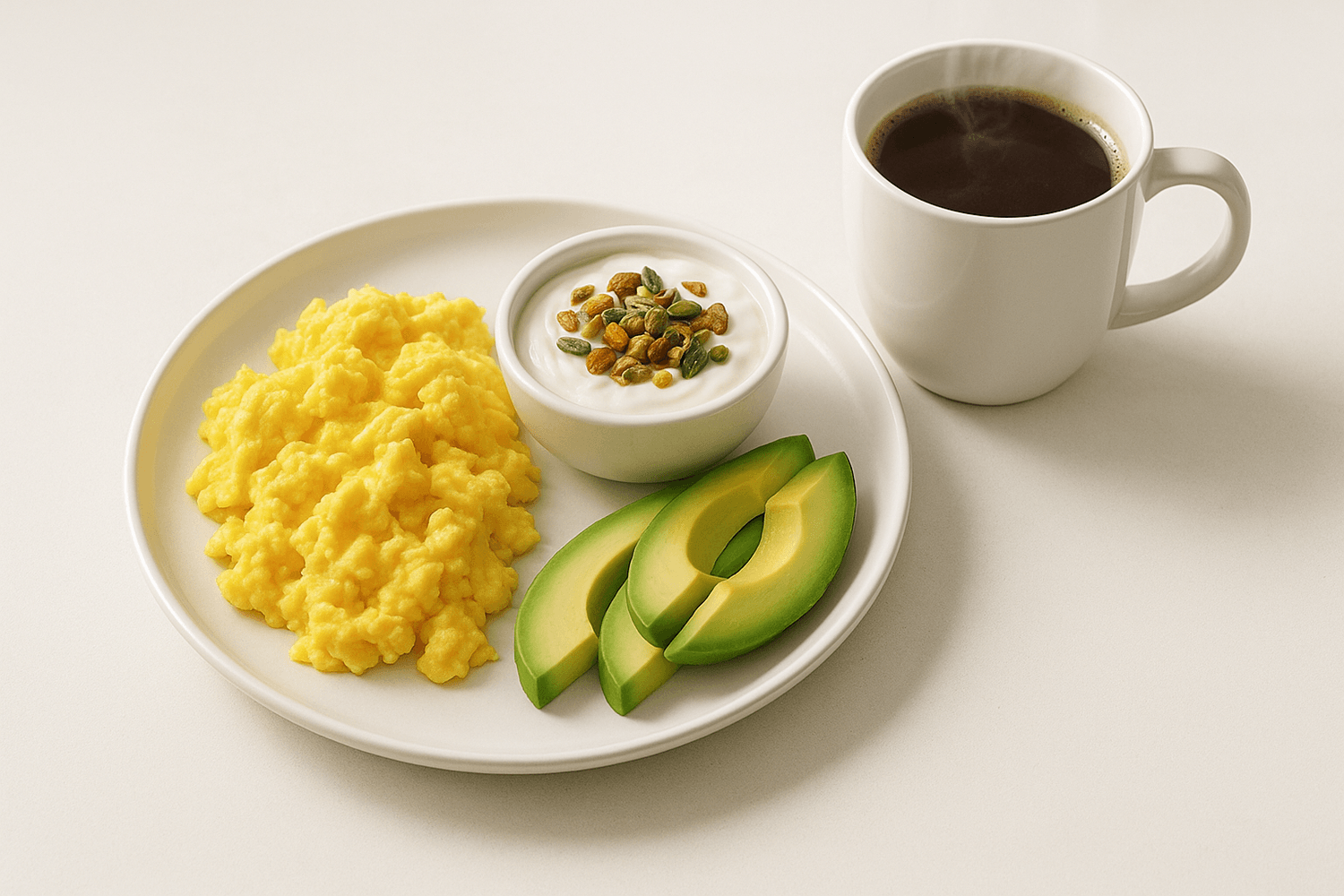
Habit 1: Delay Breakfast—Shrink Cravings and Boost Energy Naturally
Here’s a habit that may raise an eyebrow: pushing breakfast later instead of forcing it down first thing in the morning. For decades, we’ve been told that “breakfast is the most important meal of the day.” But for women over 40, the old rulebook doesn’t always apply.
Why It Works
In the early hours, your body is running on a different set of instructions. Cortisol—the “get up and go” hormone—naturally peaks in the morning. [¹] That’s not a bad thing. Cortisol gives you energy to face the day, but it also blunts appetite.
Ever notice that you’re not truly hungry when you wake up, yet you eat out of habit because you’ve heard you’re supposed to?
The problem: eating too early, especially a carb-heavy meal, can cause an insulin spike your body doesn’t need. The result? Blood sugar crashes mid-morning, followed by cravings that hit like a freight train. Instead of working with your natural rhythm, you’ve set yourself up for an energy roller coaster.
Waiting until mid-morning, when hunger actually kicks in, aligns your eating with your body’s cues. This small shift gives your metabolism a chance to tap into stored fat before you refuel.[²]
What It Looks Like in Real Life
Picture this: instead of scarfing down toast and orange juice at 7 a.m., you sip water, maybe coffee or tea, and get moving.
Around 10 or 11, when your stomach starts to growl, you finally sit down to eat. And instead of something sugary, you give your body what it’s really asking for—protein and healthy fats.
Think scrambled eggs with avocado, or Greek yogurt topped with nuts and seeds.
“If you’re wondering what other quick, satisfying options fit this style of eating, my e-book ‘21 Free Keto Recipes’ has plenty of simple, flavorful ideas you can make without stress.”
The difference? By mid-afternoon, you’re not fighting that desperate craving for a muffin or a handful of chips. Your energy feels steady. Your mood doesn’t swing. And without even trying, you’ve naturally reduced your overall calorie intake—because you cut out the mindless snacking that often comes with blood sugar crashes.
Counterintuitive but Powerful
Here’s the kicker: delaying breakfast doesn’t slow your metabolism.
In fact, research on intermittent fasting shows that stretching the time between your last meal and your first meal of the next day can improve insulin sensitivity, reduce inflammation, and even support fat loss.[³]
The catch? You don’t need to follow a rigid fasting schedule or starve yourself until noon. This isn’t about discipline; it’s about alignment.
You’re simply letting your body’s natural signals lead instead of an outdated slogan about breakfast.
Action Step
Tomorrow morning, skip the automatic breakfast. Instead:
Drink water, stretch, or take a short walk
Wait for real hunger
When it arrives, choose protein-rich foods like eggs, salmon, or cottage cheese paired with healthy fats like avocado or nuts
The payoff: steady energy, fewer cravings, easier fat loss.

Habit 2: Swap Long Cardio for Micro “Hormone-Friendly” Movement
backfire If the idea of another 45-minute treadmill slog makes you groan, you’ll love this one.
Women over 40 don’t actually need more cardio. In fact, pounding away on the elliptical can, raising cortisol and slowing fat loss.[⁴]
What your body responds to better? Small, powerful bursts of movement sprinkled throughout the day.
Why Long Cardio Can Backfire
Here’s the tough
Stress hormones truth: endless cardio sessions can feel virtuous, but they’re often stressful for the body.spike.
Appetite increases
Joints ache.
And the more you push, the more your body holds on to fat as if it’s bracing for a storm.
That’s why so many women complain about working out harder than ever but seeing no results.
Meanwhile, shorter strength-based movements act like a reset button.
A two-minute plank, a set of squats while your coffee brews, or a few resistance band pulls before bed—each sends a signal to your body to preserve muscle and keep your metabolism revved.
Over time, muscle is what makes you a better fat-burner, not hours of cardio. [⁵]
The Beauty of Movement “Snacks”
Think of these mini sessions as “movement snacks.”
Just like a quick handful of almonds keeps you fueled between meals, a short burst of movement keeps your metabolism humming.
It doesn’t have to be sweaty, exhausting, or perfectly planned. It just has to be consistent.
Example: You’re working at your desk. Every hour, you set a timer, stand up, and do ten squats. That’s less than a minute. By the end of an eight-hour day, you’ve clocked 80 squats without a formal workout.
Add in calf raises while brushing your teeth or push-ups before bed, and you’ve trained your muscles without carving out an hour at the gym.
Counterintuitive but Effective
This approach might feel too easy. Isn’t weight loss supposed to hurt?
Actually, no. Studies show that breaking up sedentary time with short movement bursts improves blood sugar control and boosts fat metabolism.[⁶]
Small but steady wins the game—especially when hormones are shifting and recovery matters more.
The Emotional Payoff
Here’s another benefit: no more guilt about skipping the gym.
You can ditch the all-or-nothing mindset. Instead of thinking, If I can’t do a full workout, why bother?—you shift to every little bit adds up.
That change alone removes pressure and makes movement feel freeing instead of punishing.
“Pairing these quick movement snacks with easy, balanced meals makes the results even stronger. If you’d love some inspiration, my free guide ‘21 Free Keto Recipes’ can help you put delicious, no-fuss meals on the table.”
Action Step
Pick one “movement snack” and do it every day.
Lorem ipsum dolor sit amet
Lorem ipsum dolor sit amet
Lorem ipsum dolor sit amet
The payoff: toned muscles, stronger metabolism, zero guilt.

3: Create a “Cortisol Off Switch” Before Bed
This last habit might be the most surprising of all. It has nothing to do with food or exercise.
Instead, it’s about calming your body’s stress response before you sleep.
Why? Because high cortisol at night is like pouring glue into the gears of your metabolism.
Why Nighttime Cortisol Matters
Cortisol isn’t the enemy—it’s essential for survival.
But when stress stays high at night, your body can’t shift into rest mode. Sleep becomes shallow. Hunger hormones get out of whack. And fat, especially around the belly, clings stubbornly.[⁷]
If you’ve ever woken up at 2 a.m. wired, or dragged yourself out of bed feeling unrested, cortisol is often the culprit.
And here’s the kicker: no matter how clean you eat or how many workouts you log, poor sleep can override all of it.
The Power of a Ritual
A “cortisol off switch” is simply a ritual that tells your nervous system it’s safe to relax.
It doesn’t have to be complicated or time-consuming. It just has to be consistent.
Examples:
Warm shower or bath: The heat soothes muscles and mimics the natural drop in body temperature that triggers sleep.
Breathing exercises: A few minutes of slow, deep breaths signals your body to leave fight-or-flight mode.
Journaling: Getting racing thoughts out of your head and onto paper stops the mental hamster wheel
Each of these practices lowers stress hormones and sets you up for deeper, restorative sleep.[⁸]
A Sensory Example
Imagine this: you dim the lights, put your phone away, and make a cup of chamomile tea.
The steam curls into the air, carrying that earthy, calming scent. You sip slowly, then jot a few thoughts in a notebook—things you’re grateful for, or worries you’re letting go of.
By the time your head hits the pillow, your body has shifted gears. You’re not braced for battle anymore—you’re at peace.
That’s what turns sleep into a weight loss ally.
Counterintuitive but True
Most women think weight loss hinges on what happens in the kitchen or the gym. Few realize that their evening routine may matter more.
Sleep isn’t “downtime.” It’s when your body regulates hormones, repairs muscle, and burns fat more efficiently.
Neglecting it is like trying to drive with the parking brake on.
Action Step
Choose one calming practice and repeat it nightly.
It could be as simple as a warm shower or five minutes of deep breathing.
Over time, your brain will start associating the ritual with relaxation, and the habit will become automatic.
The payoff: deeper sleep, balanced hormones, easier fat loss.

A New Way Forward Is Possible
Maybe you’ve caught yourself thinking, “Why does this have to be so complicated? Why can’t I just find something simple that actually works for me?”
If that thought has crossed your mind, you’re not alone.
And no—you’re not failing. You’re just tired of being buried under a mountain of conflicting advice that was never designed for the life you’re actually living.
Here’s the truth: you don’t need to be perfect, and you don’t need to overhaul your world overnight.
What you need are small, steady, powerful habits that actually fit into your day—the kind that work with your body, not against it.
That’s what these three shifts are about:
Delaying breakfast to match your hormones instead of fighting against them.
Prioritizing protein so your body feels nourished, not deprived
Turning your evening wind-down into a weight-loss ally instead of a late-night trap.
These aren’t tricks. They’re lifelines—practical tools that remind you that weight loss after 40 doesn’t have to feel like punishment.
For Zuri, the 45-year-old financial consultant, these three habits were the turning point.
She’d spent years buried under complicated rules—counting calories, fasting windows, strict workouts—and carried the guilt of never being “consistent enough.”
What she longed for was ease, something that could fit into her packed schedule without adding more stress. When she discovered this simple, habit-based approach, the frustration finally lifted.
Instead of dread, she felt relief—and even excitement—because for the first time, weight loss felt doable.
“And if you’d like a little extra support in making this feel easy, my free e-book ‘21 Free Keto Recipes’ is yours to download. Think of it as your starter pack for stress-free, delicious meals that fit right into your busy life.”
And here’s the best part: the moment you also try even one of these habits, you’ll feel the shift.
Less guilt. More energy. A sense of ease you maybe thought you’d lost forever.
So give yourself credit. You don’t have to climb the whole mountain today.
Just take the first step, then another, and another.
That’s how change really sticks—quietly, steadily, almost surprisingly.
You’ve carried the weight of impossible expectations long enough.
Now it’s time to carry something else: belief in yourself.
Because you’re not just capable of change—you’re built for it.
Stand a little taller, take a breath, and let this sink in: your best years aren’t behind you.
They’re right here, waiting for you to claim them.
Just like Zuri, you can let go of the overwhelm, the guilt, and the endless rules. You can step into ease, confidence, and real results—one small habit at a time.
References
1. Walker, W.H., Walton, J.C., DeVries, A.C., & Nelson, R.J. (2020). Circadian rhythm disruption and mental health. Translational Psychiatry.
2. Freire, R. (2020). Scientific evidence of diets for weight loss: Different macronutrient composition, intermittent fasting, and popular diets. Nutrition.
3. Patterson, R.E., & Sears, D.D. (2017). Metabolic Effects of Intermittent Fasting. Annual Review of Nutrition.
4. Hackney, A.C. (2020). Stress and the neuroendocrine system: the role of exercise as a stressor and modifier of stress. Expert Review of Endocrinology & Metabolism.
5. Phillips, S.M. (2014). A brief review of critical processes in exercise-induced muscular hypertrophy. Sports Medicine.
6. Dunstan, D.W. et al. (2012). Breaking up prolonged sitting reduces postprandial glucose and insulin responses. Diabetes Care.
7. Spiegel, K., Tasali, E., Penev, P., & Van Cauter, E. (2004). Sleep curtailment in healthy young men is associated with decreased leptin levels, elevated ghrelin levels, and increased hunger and appetite.
Annals of Internal Medicine.
8. Kolla, B.P., & Auger, R.R. (2011). Sleep disorders in women: Clinical features and management. Obstetrics and Gynecology Clinics of North America.
JOIN MY MAILING LIST
Ketogenicaid
All rights reserved © 2025 ketogenicaid